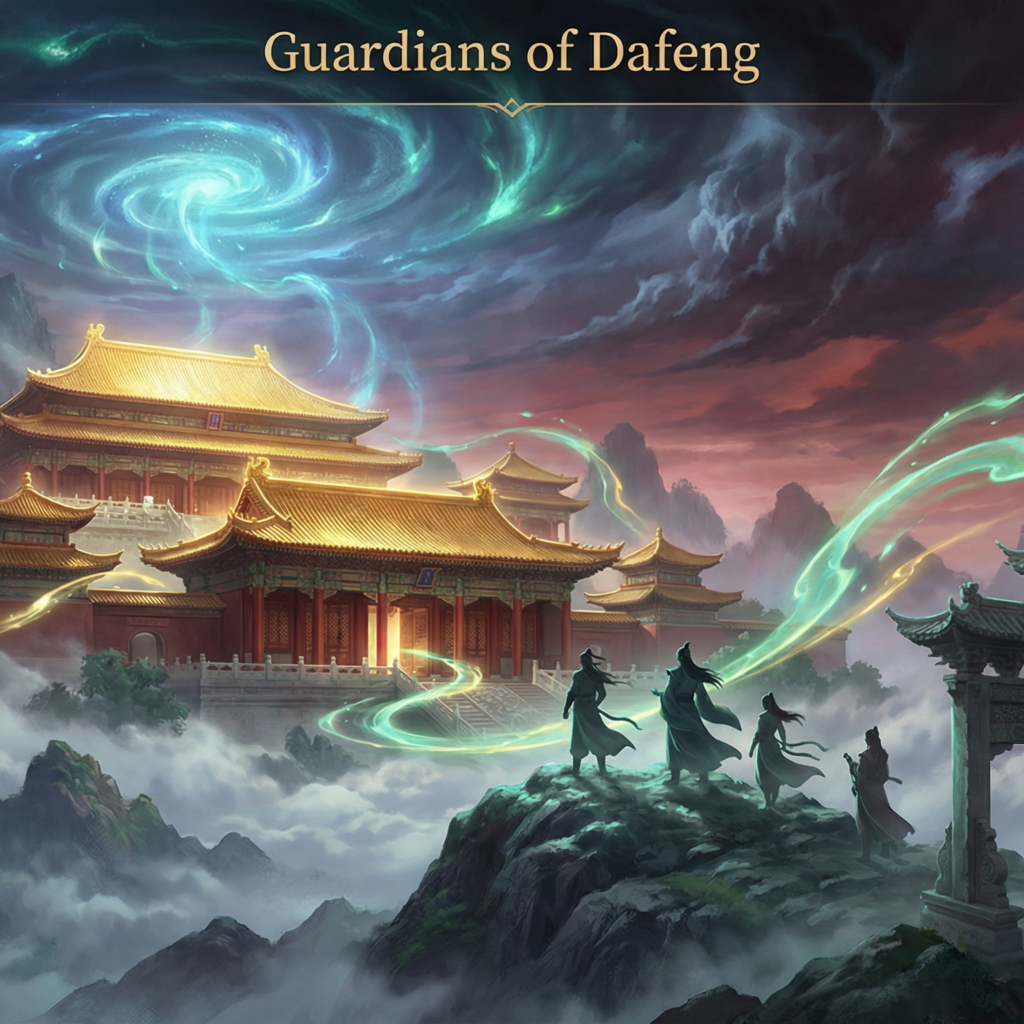
Life has kept me away from these projects for a while — but after restructuring my professional life to focus on consulting work, I’ve found a much better work-life balance, and it’s given me the room to pick these labor-of-love projects back up. Guardians of Dafeng is one I’ve missed working on, so here’s where things actually stand.
If you haven’t read the original post, start here: Guardians of Dafeng: A Fan-Made RPG 3 Months in the Making. The short version: it’s a fan-made RPG Maker MZ game inspired by the Chinese drama Guardians of the Dafeng, following Xu Qi’an — a modern detective transported into an ancient dynasty — through a world built around a proper cultivation system and faction politics. This update isn’t about new maps or cutscenes yet — it’s about the infrastructure underneath the project actually catching up to where the game itself needs to go.
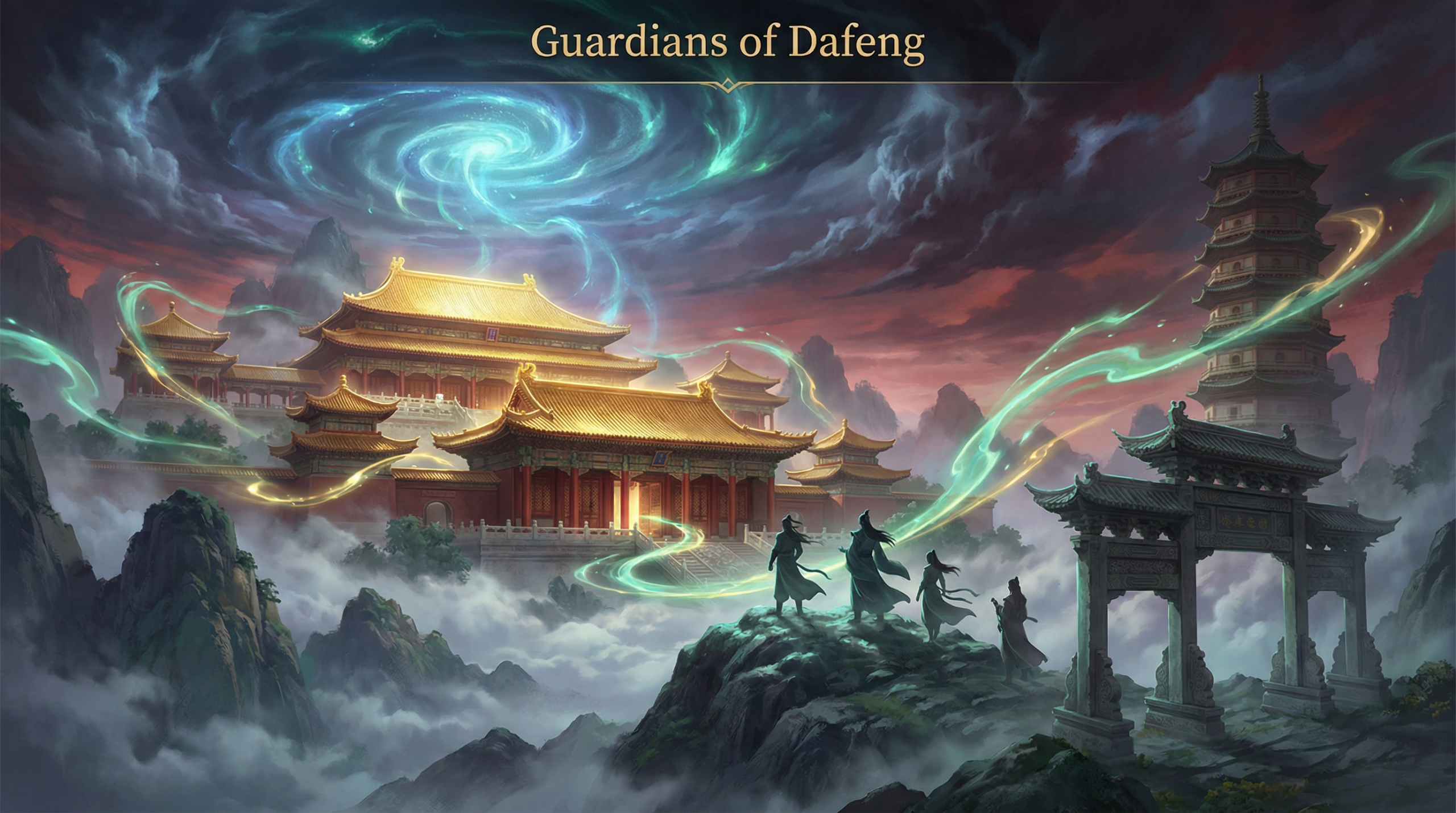
Moving off GitHub, onto my own infrastructure
The project originally lived on public GitHub, which made sense early on for visibility and easy asset sharing. But as the legal/IP questions around a fan project like this got more real, and as the project’s internal documentation (game design docs, cultivation-system research, character and class breakdowns) grew into something genuinely substantial, I moved the whole repository onto a private, self-hosted Forgejo instance instead. Same git workflow I’m used to, but it now lives entirely on infrastructure I control — which matters a lot more once a project has real design documents and research behind it, not just code and assets.
This ties directly into the other project I’ve been heads-down on: the home AI server build. If you haven’t read that series, the latest entry covers finally getting the cooling right on the dual-Tesla setup. That server is now hosting the Forgejo instance this project lives on.
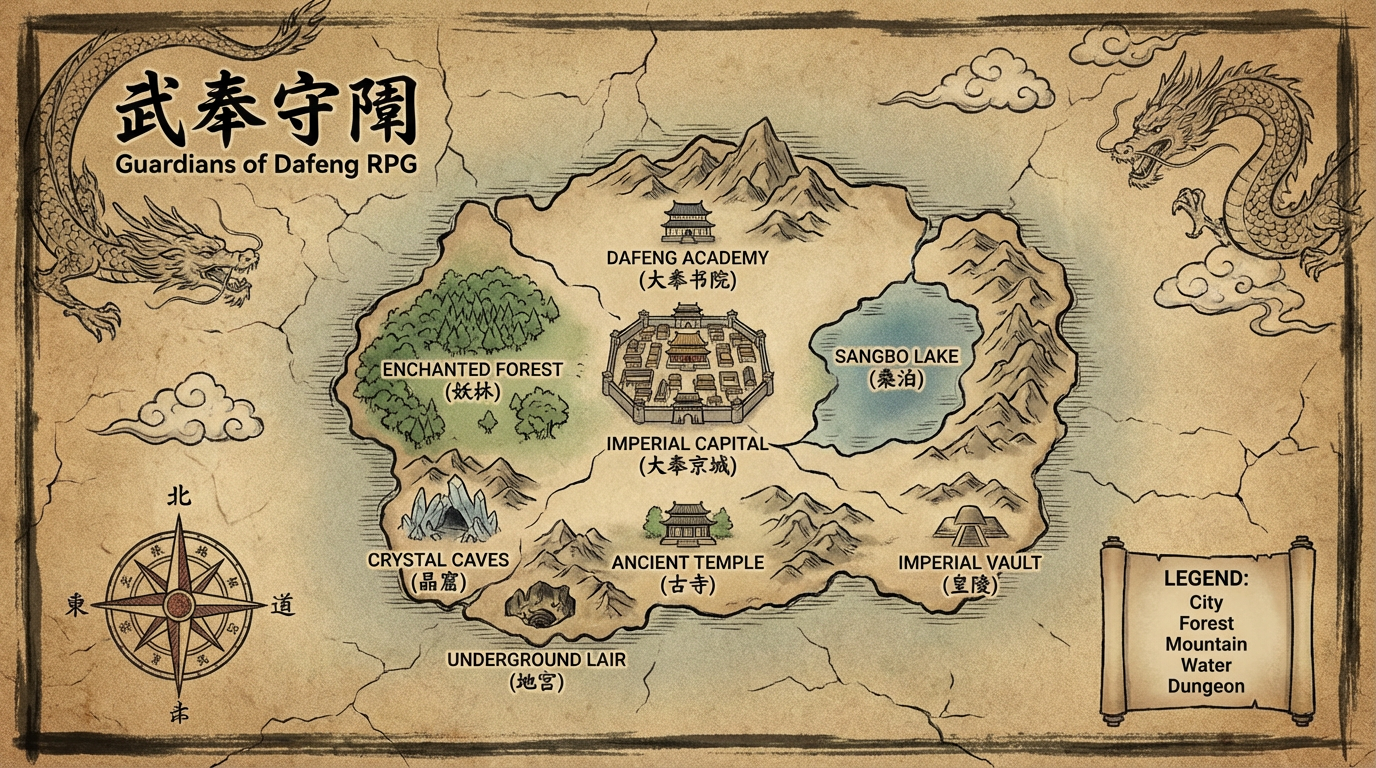
The current world map — Sangbo Lake, the Imperial Capital, Dafeng Academy, and the rest of the territories Xu Qi’an moves through.
From cloud AI to local AI
The original post mentioned leaning on Manus and Claude.ai for a lot of the early creative and technical lift — mockups, cutscene generation, code for tedious automation tasks. That’s still true for the heaviest lifting, but I’ve started meaningfully shifting day-to-day development work onto my own local AI stack, running on the same P100/P40 hardware from the server series.
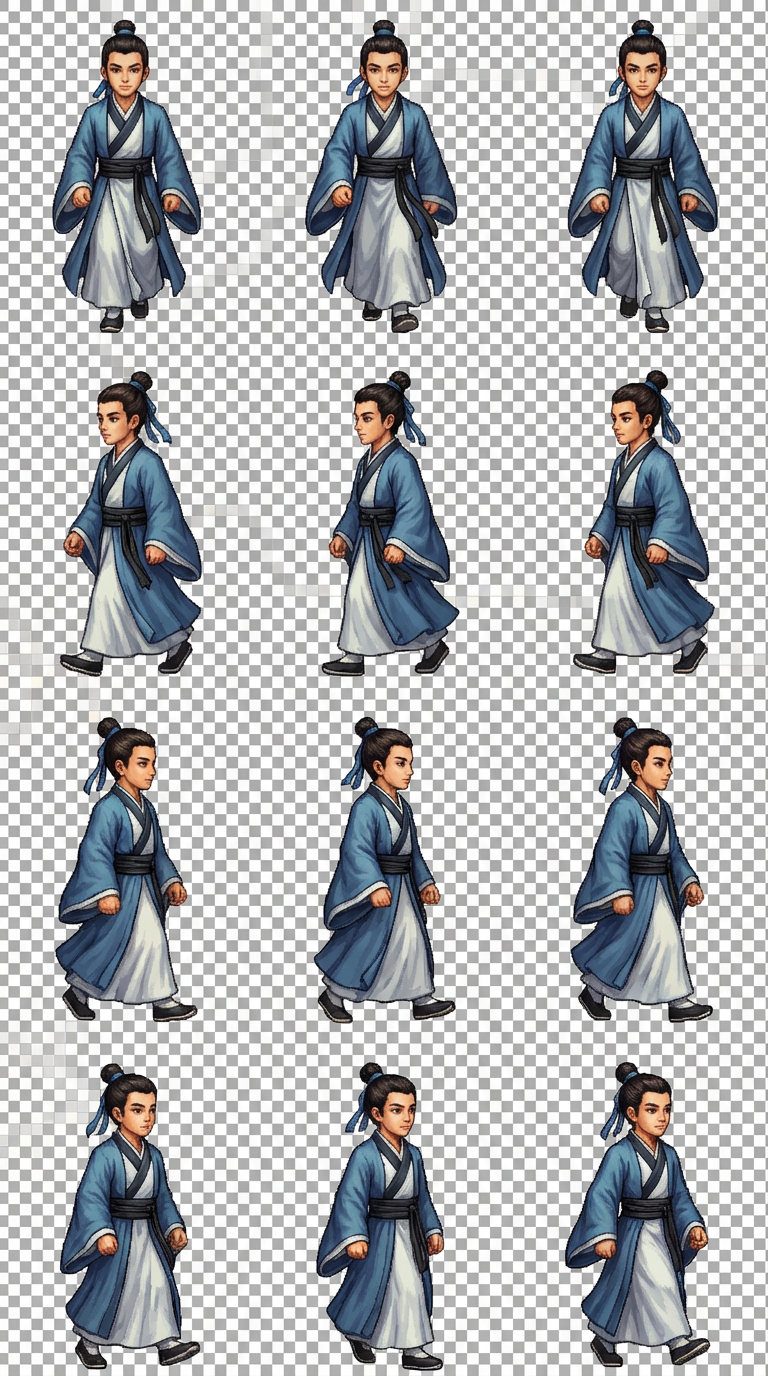
Xu Qi’an — the modern detective at the center of the story.
The practical result: I can now hand off a genuinely useful chunk of design work — character ability writeups, item/gear databases, lore-consistent dialogue drafts — to locally-hosted models, running entirely on hardware I own, with zero per-query cost. I recently ran a real test of this: two AI “agents” working in parallel, one designing the playable class progression through the cultivation system, the other building out a full early-game gear database across all four classes (Guardian, Scholar, Martial Artist, Sorcerer). Both finished with genuinely usable, lore-consistent output in a few minutes, running side by side on the same server discussed in the hardware series. It’s not a replacement for Manus or Claude on the hardest creative problems yet, but for a real category of the grinding, detail-heavy design work this game needs, it’s already there.
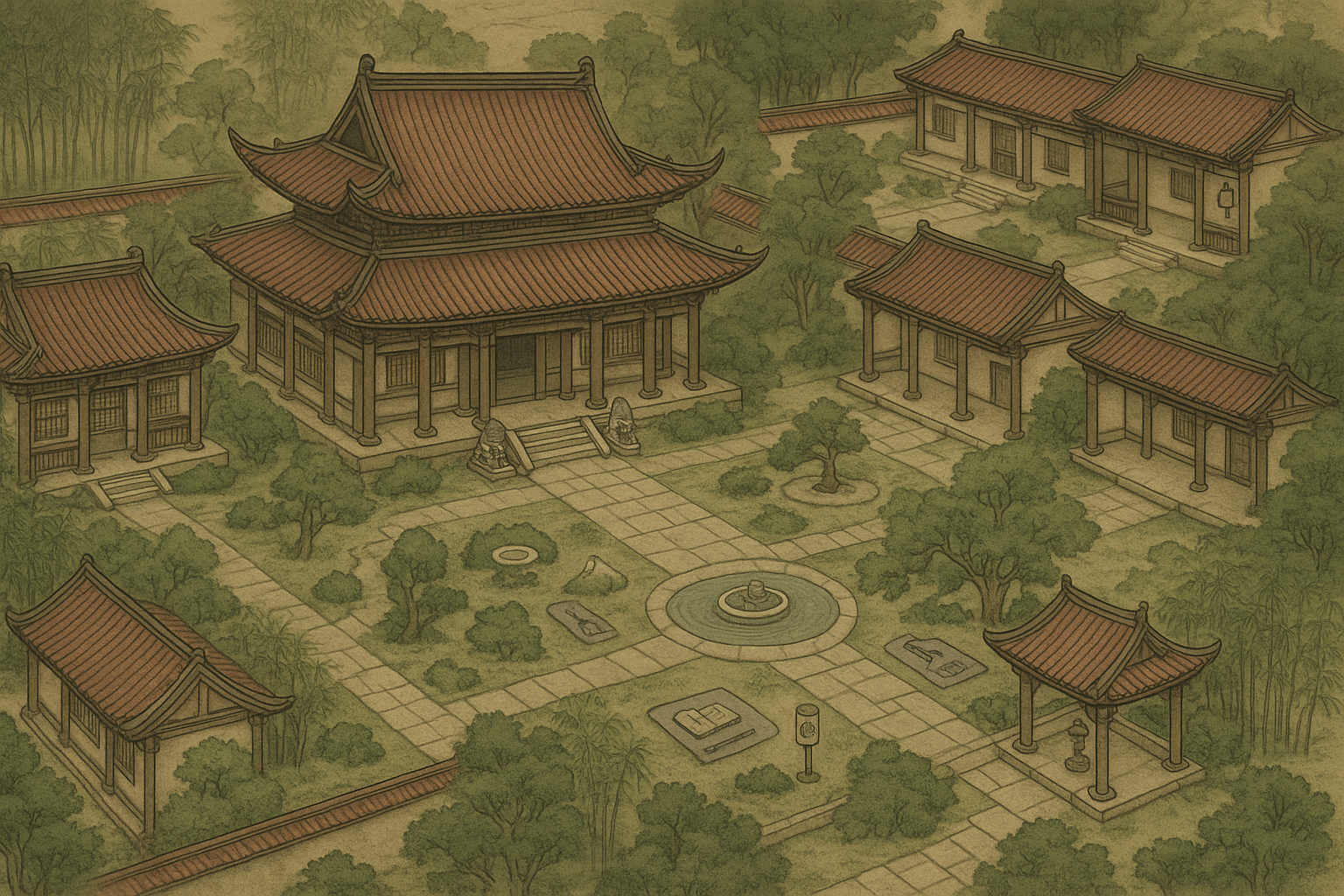
Dafeng Academy — one of the locations the local AI pipeline will help flesh out next, from lore to encounter design.
What’s next
With the infrastructure side finally solid — private git hosting, a properly cooled and tuned AI server, and a real local AI workflow — the actual next steps are back to being about the game itself:
- Finalizing the remaining maps against the existing mockups, which was always the last big content gap
- Expanding the class/cultivation system documentation using the local AI pipeline, so the Nine Grades / Three Realms progression is fully specified for every class before implementation
- Building out the complete early-game gear and item database, starting from the local-AI-generated draft and refining it by hand
- Continuing to pursue the rights conversation for the original IP, which remains the real long-pole item before any kind of public release can happen
It feels good to be back working on this. More updates to come as the maps come together.
This remains a fan-made, non-commercial project created out of love for the original series. All rights to the Guardians of Dafeng intellectual property belong to the original creators.