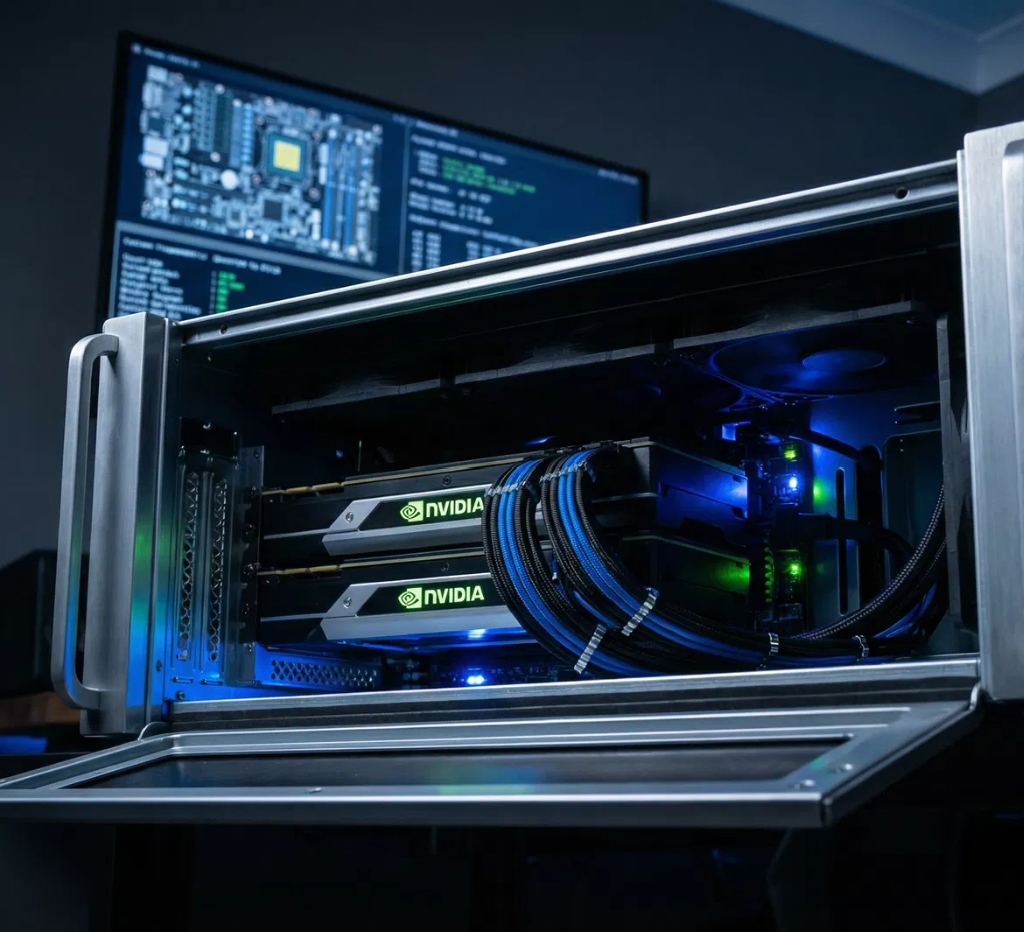
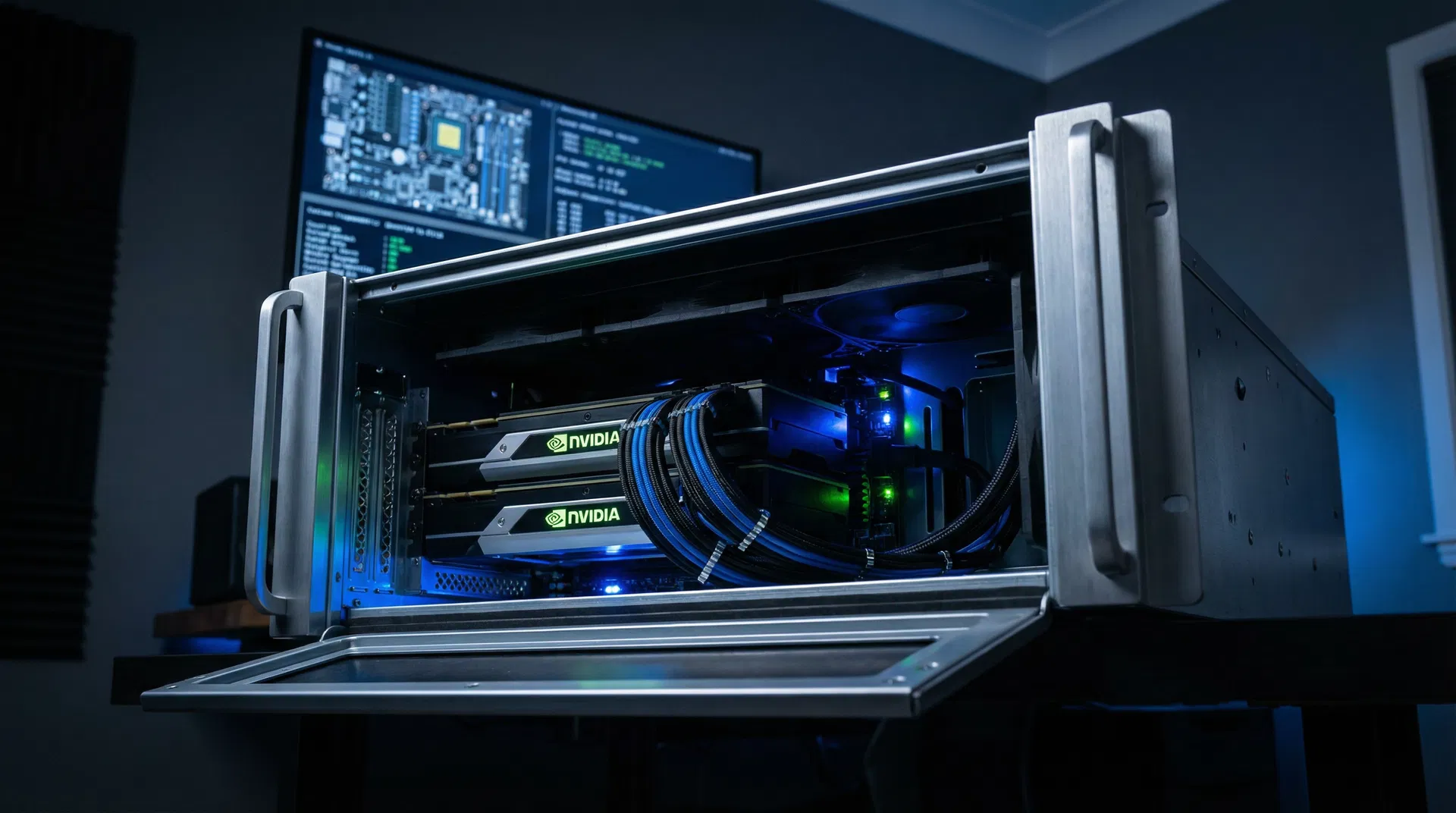
The dream of having a personal AI supercomputer at home is now within reach. The convergence of powerful, affordable hardware and open-source software has democratized access to technologies that were once the exclusive domain of large corporations and research institutions. This guide is your roadmap to building such a machine.
Why Build a Home AI Server?
A dedicated home AI server provides a sandboxed, high-performance environment for a wide range of applications:
- Large Language Models (LLMs): Run and fine-tune models like Llama, Mistral, and others for tasks ranging from creative writing to code generation.
- Generative AI: Create stunning images and art with Stable Diffusion, experiment with different models, and train your own LoRAs.
- Machine Learning & Data Science: Accelerate your data analysis, model training, and research without relying on expensive cloud services.
- Homelab & Virtualization: A powerful server is the cornerstone of any serious homelab, allowing you to run multiple virtual machines and services.
The Power of Tesla: P100 and P40
This series focuses on two specific GPUs: the NVIDIA Tesla P100 and Tesla P40. While they share the same Pascal architecture, they have distinct strengths that make them a complementary pair for a versatile AI server.
The P100 is a training powerhouse, boasting high-bandwidth HBM2 memory and strong FP16 performance, which is crucial for accelerating the training process of deep learning models. In contrast, the P40, with its massive 24GB of GDDR5 VRAM and exceptional INT8 performance, excels at inference—running large, already-trained models efficiently [1] [2].
By combining these two GPUs, you create a system that can both train new models effectively and run large, complex models that would be impossible on consumer-grade hardware.
Project Scope and Prerequisites
This is an advanced project that requires a certain level of technical comfort. You should be familiar with:
- Building a PC from components.
- Working with the Linux command line.
- Basic networking concepts.
- The principles of virtualization.
While this guide aims to be as detailed as possible, it assumes a foundational understanding of these areas. The total cost for a server build as described in this series can range from $1,500 to $3,000 USD, depending on component choices and the state of the used hardware market.
In the next part, we will dive deep into the specific hardware components you’ll need to get started.